What To Do If You See a Bear in the Wild
Encountering a bear in nature is rare and exciting, but your reaction is extremely important. The way you behave can determine whether the situation stays calm and safe. Bears usually avoid humans, and in most cases, conflicts happen only when the animal feels surprised, cornered, or threatened.
If you are exploring areas where bears live, it is strongly recommended to stay with experienced local guides who understand animal behavior.The following advice is general guidance. Wildlife encounters are unpredictable, so always prioritize official instructions and local regulations. Try to avoid taking your dog into bear territoty as it can be very risky not only for the dog, but also for you as the dog might attract the bear directly towards you.
Stay Composed and Avoid Sudden Actions
If you notice a bear:
- Stop moving immediately.
- Remain calm and avoid loud reactions.
- Do not attempt to approach.
- Slowly create space by moving sideways, not backwards in a hurry.
- Keep your presence noticeable in a calm way (normal voice can help).
- Avoid blocking the animal’s path.
Most bears prefer to leave once they understand a human is nearby.
Keep Your Distance at All Times
Distance is your best protection.
- Never try to get closer for photos or videos.
- Avoid young bears, as the mother is usually nearby.
- Do not attempt to follow a bear.
- Give animals enough space to move freely without feeling pressured.
Wild animals behave differently depending on circumstances, so observation should always be from far away.
Avoid Situations That Increase Risk
Certain actions can raise danger levels:
- Do not position yourself near feeding areas or known trails.
- Avoid approaching resting spots or shelters.
- Never surround a bear with other people.
- Do not interfere with its movement.
A bear that feels trapped may react defensively.
Special Attention to Female Bears With Cubs
Female bears are highly protective. When cubs are present, the mother may respond very quickly to perceived threats. Even unintentional closeness can trigger defensive behavior.
If cubs are visible:
- Leave the area calmly and immediately.
- Do not attempt to observe from close range.
- Avoid drawing attention.
Respecting wildlife space reduces risk significantly.
General Safety Recommendations
- Make light noise while walking in forested areas to avoid surprising animals.
- Travel with companions whenever possible.
- Follow local safety guidelines.
- Use professional guidance when available.
- Do not split your group, more individual people in the forest can easily corner a bear who will be left with no escape route.
In most natural encounters, bears choose to withdraw once they detect humans. Calm behavior, awareness, and distance are the key principles of safe wildlife observation.
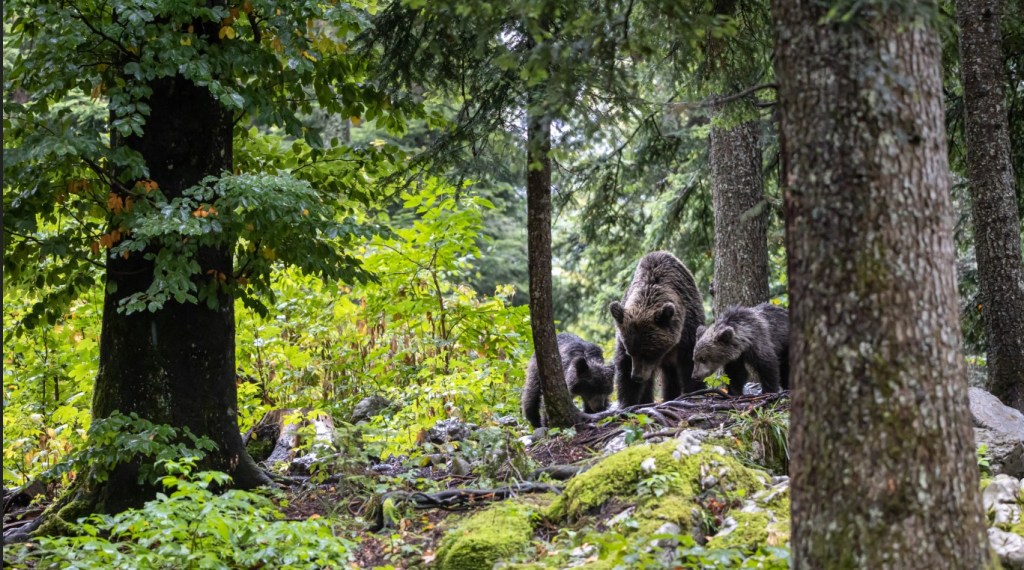
 Bear Watching Romania